

Converging evidence from multiple fields has increasingly supported models of atypical brain connectivity in autism, which can be captured by non-invasive neuroimaging. Yet the promise to yield clinically useful biomarkers remains unmet, in part because variability in neuroimaging findings reflects the inherent behavioral and biological heterogeneity of autism itself.
Neuroimaging of brain connectivity offers a strategic vantage point, positioned intermediate between behavior and underlying neurobiology. Leveraging this advantage requires studies at unprecedented scale and novel approaches. This lecture examines how large-scale collaborative efforts like the Autism Brain Imaging Data Exchange (ABIDE) have enabled both reproducible discoveries and new strategies for addressing heterogeneity. Dr. Di Martino will present functional connectivity findings across major brain networks and developmental trajectories, including empirical work targeting known sources of clinical variability and data-driven approaches that use brain features to parse heterogeneity within the spectrum.
Framing the field as an "anthology in progress," Dr. Di Martino will discuss what we've learned, what remains uncertain, and outline a framework for advancing connectivity-based biomarkers toward earlier detection and more personalized intervention.
Adriana Di Martino, MD, is the Founding Director of the Autism Center at the Child Mind Institute and an internationally recognized researcher on the neurobiological underpinnings of autism spectrum disorder. She established and directs the Autism Brain Imaging Data Exchange (ABIDE), a groundbreaking initiative that aggregates and shares brain imaging data from laboratories worldwide to accelerate autism research. Dr. Di Martino's work focuses on identifying early childhood brain connectivity differences to develop objective biological markers for improved early intervention and treatment.
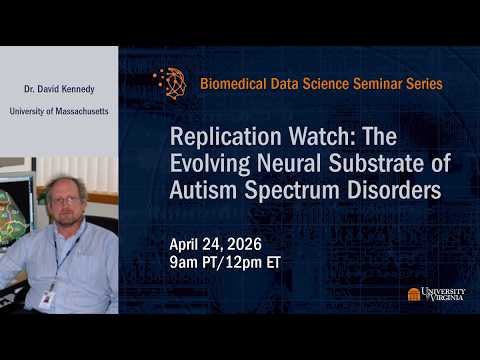
Science is built on trust, and the advancement of knowledge relies on the careful generalization of previous observations. In neuroanatomic studies involving children with autism, the published literature provides a rich repository of findings, yet the pathway from observation to meaningful knowledge about the neural substrate of autism remains complex and contested. This presentation draws on the breadth of published research, considering how observations are transformed, sometimes kicking and screaming, into broader scientific understanding. By examining factors such as replication, methodological diversity, and interpretive challenges, this seminar aims to illuminate both the strengths and limitations of current neuroanatomic knowledge in autism spectrum disorders.
Dr. Kennedy is a Professor of Psychiatry and Radiology at the University of Massachusetts Chan Medical School. He is Director of the Division of Neuroinformatics at the Child and Adolescent Neurodevelopment Initiative (CANDI). His research interests include applications of neuroimaging technology to neurodevelopment, promotion of neuroinformatic approaches to neuroimaging research, and enhancement of the research reproducibility infrastructure central to neuroimaging research.
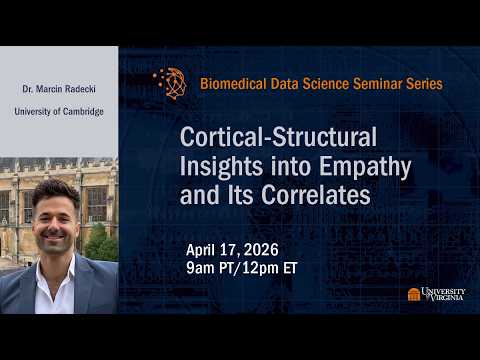
Clinical and cortical insights into empathy – understanding others’ mental states (cognitive empathy) and responding to them with an appropriate emotion (affective empathy) – are fragmented. In an attempt to integrate them, Marcin will present three studies, including ongoing work. In Study 1, he will discuss the effects of autism and three other psychiatric conditions on empathy, and sex-by-diagnosis interactions. In Study 2, he will discuss the effects of autism, sex, and age on empathy, cortical thickness (CT), and surface area (SA) in a framework guided by the brain’s meta-analytic activation and resting-state connectivity. In Study 3, he will discuss the effects of psychopathy on empathy, CT, and SA in the incarcerated male population.
Marcin is a Research Associate at the Autism Research Centre, University of Cambridge, United Kingdom. He holds degrees in psychology (BA), neuropsychology (MSc), and neuroscience (PhD). He is passionate about cognitive and psychiatric neuroimaging using structural and functional MRI.

Autism is a neurodevelopmental condition with a biological basis, but clinical decisions remain reliant upon behavioral observation. This presentation will review the state of the science in developing biomarkers to guide clinical research and practice in autism. The speaker will describe strategies for approaching biomarker development, progress in biomarker development, and barriers to advancement. Potential methods for developing more powerful biomarkers and more informative scientific studies will be presented.
James C. McPartland, Ph.D., is the Harris Professor of Child Psychiatry and Psychology at the Yale Child Study Center. He is a practicing licensed child psychologist and Director of the Yale Developmental Disabilities Clinic. Dr. McPartland is a Director of the Yale Center for Brain and Mind Health, Co-Director of Team Science at the Yale Center for Clinical Investigation, Director of Undergraduate Studies at the Child Study Center, and the Principal Investigator of the Autism Biomarkers Consortium for Clinical Trials, a US-based effort to identify biomarkers to support intervention research in autism. Dr. McPartland’s program of research investigates the brain bases of neurodevelopmental conditions to develop biologically-based tools to improve detection, treatment, and, ultimately, the quality of life for autistic people and their families.

It's important to understand how behaviors related to autism change over time, especially during treatment. This talk highlights new advances in speaker diarization and automated speech recognition models that make it easier to track meaningful change in language and social communication. These digital phenotyping tools have the potential to transform how we measure progress in both research and clinical care.
Megan Micheletti, Ph.D. is a postdoctoral fellow at UCLA working with Dr. Catherine Lord. She is a licensed clinical psychologist that works with autistic individuals and their families. Her research focuses on developing and applying automated tools to detect change in social behavior and communication over time.

The lecture will review progress in precision health in NDDs, with focus on studies of early infant development, with improved precision in timing of diagnosis and intervention, and studies of clinical trial readiness in genetic neurodevelopmental disorders. The lecture also will discuss recent advocacy efforts in autism and child health, emphasizing the importance of messaging rigorous and evidence-based science and clinical care to the broader community.
Dr. Shafali S. Jeste, MD is a behavioral child neurologist and Chair of Pediatrics at UCLA David Geffen School of Medicine. Her research focuses on autism and related neurodevelopmental disorders, with an emphasis on identifying biomarkers and predictors of atypical brain development in infants and young children. Her work integrates neurophysiology, genetics, and behavioral assessments to enable earlier diagnosis and targeted interventions, particularly in genetic conditions associated with autism. Dr. Jeste has led multiple NIH-funded studies and clinical trials and has authored more than 150 peer-reviewed publications advancing precision medicine approaches for neurodevelopmental disorders.